

On August 29, 2022, the Governor of Nevada, Steve Sisolak, created a proclamation for the state, declaring September as Suicide Prevention month. While the country struggles with a suicide epidemic, Las Vegas’ high veteran population provides a challenge for local healthcare officials. A 2019 datasheet reported 115 veteran deaths per year by suicide in Nevada, emphasizing the state’s higher veteran suicide rates over the national veteran and civilian rates. According to 2021 census estimates, there are over 140,000 veterans living in the valley.
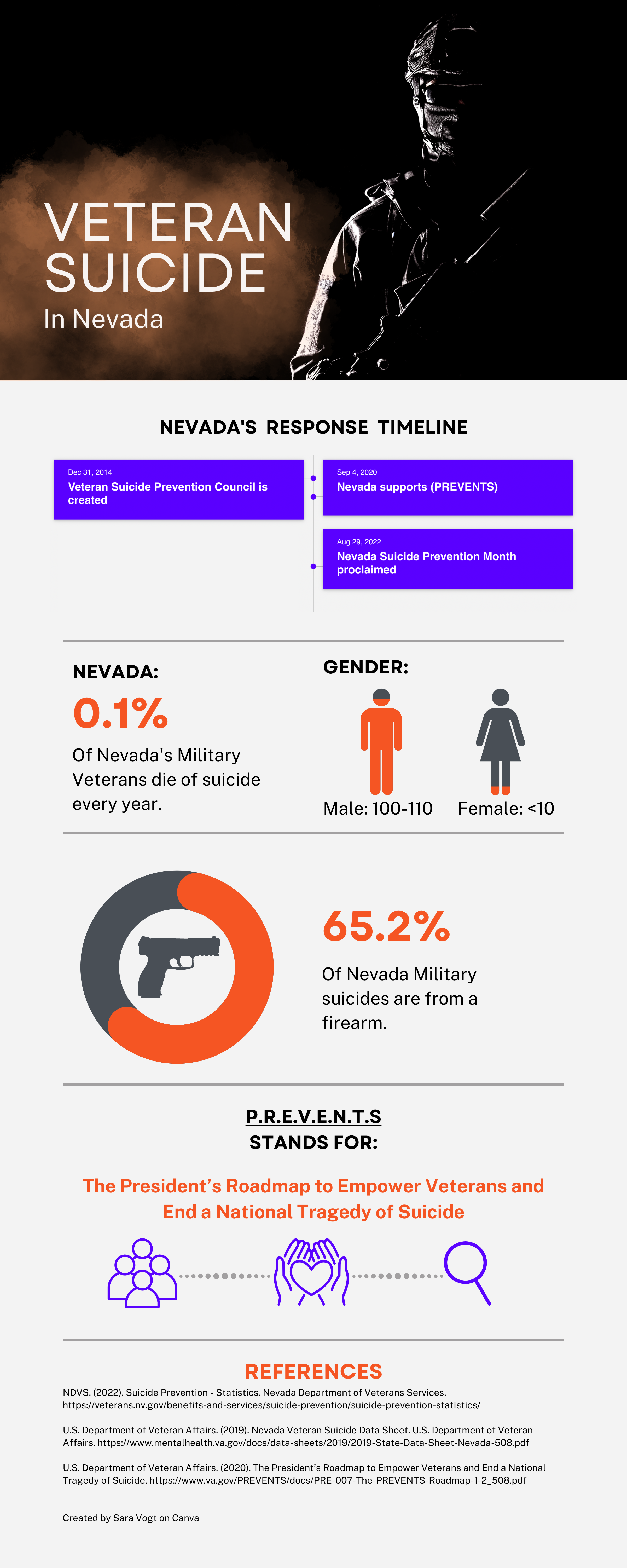
In 2012, a report written by Dr. Luana Ritch, then the Bureau Chief for the Division of Vital Records, titled “Suicide in Nevada’s Military Veteran Population, 2008-2010: A Silent and Tragic Epidemic.”, spurred Nevada’s intense look at remedying the issue. The state’s Governor in 2013, Brian Sandoval, published Executive Order 2013-22 which pushed for veteran care and “community-level communication and collaboration.” This executive order established the Governor’s Veteran Suicide Prevention Council, which included representatives from local Veteran Affairs (VA) Vet Centers, Health and Human Services, and nine other organizations. The task force came together and recognized multiple objectives that could aid veterans in the future.
As of 2018, the Mayor and Governor have implemented Suicide Awareness Challenges that encourage 24 different cities to participate in suicide prevention for military veterans. The main priorities of the challenge include screening for suicide risk, fostering community, and striving for safety plans. On September 4th, 2020, Sisolak also signed a proclamation declaring Nevada’s support for the President’s Roadmap to Empower Veterans and End a National Tragedy of Suicide (PREVENTS) to help veterans prioritize mental health. PREVENTS is part of the VA’s REACH program that gives support and resources to those in need.
Veterans that navigate to the REACH website will be brought to a page that prompts them to select their current concerns. Their selections will bring them to a list of resources that correlate to their needs. The easy-to-use website offers a video about veteran crises meant to resonate with veterans, as well as resources that range from transitioning out of the military to homelessness, employment help, and health concerns. There are other resources for Nevada veterans as well, such as the Veteran Crisis Line (Dial 988 and press 1) and the Las Vegas Vet Centers, a non-medical branch of the VA that offers peer-to-peer counseling and mental health services. The city of North Las Vegas also offers a website to provide a centralized location for information to help local veterans.
If you or someone you know needs mental health assistance, please contact the Veterans Crisis Line.
 The Las Vegas Veteran
Leave a comment